VibeCoding: The Hottest Skill of 2025
In February 2023, former Tesla AI director Andrej Karpathy introduced the term VibeCoding, which is becoming a significant trend in the tech world. This method enables individuals who have never written a line of code to develop software simply by articulating their needs.
From Coding to Communicating Requirements
In the past, claiming to develop software without coding skills would often be met with skepticism. However, VibeCoding changes that. You can now tell AI what you need in everyday language, for example, “Help me create a tool to track media reading statistics and export to Excel,” and the AI generates the code for you.
This is not a trivial development. Major tech companies are adopting this approach, and many popular apps may have VibeCoding behind them.

More than half of internet companies and banks have begun implementing it, and even traditional businesses, such as appliance retailers and chains, are secretly using it to develop internal management tools. Of course, sectors like healthcare and defense are still cautious, testing it in limited scopes due to security concerns.
A Shift in Programming Skills
Programming used to be akin to learning to play the piano, requiring years of practice to master. Now, it resembles using Word to write documents without needing to understand the underlying formatting principles. You can simply type and adjust the format as needed.
Current mainstream AI programming tools not only understand requirements and generate code but can also identify bugs and improve user interfaces.
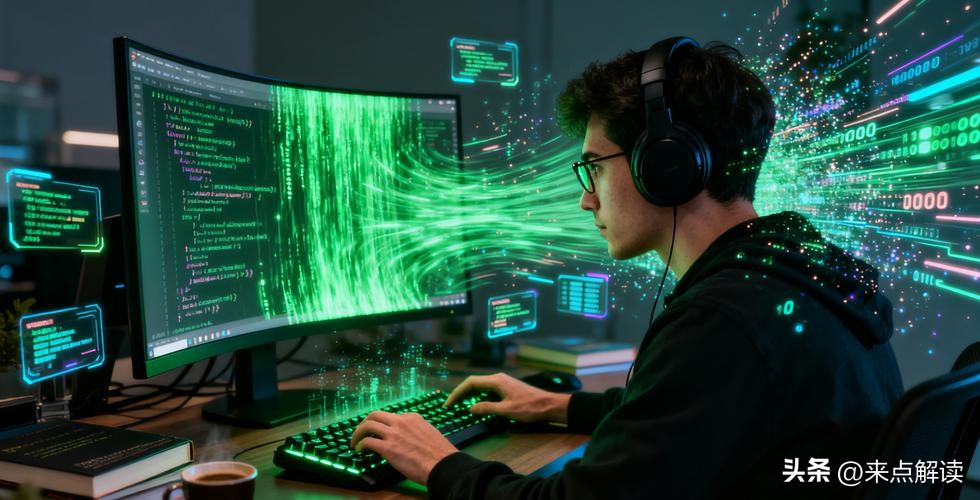
A friend in e-commerce recently wanted to create a customer management tool. By simply stating his requirements to the AI, he completed it in half an hour, a task that would have taken at least a week if outsourced.
From Programmer to Project Commander
Now, when tech companies hire product managers, they often prioritize candidates who can use AI programming tools. The role of a programmer has evolved into that of a “project commander”—you no longer need to write code yourself, but you must clearly articulate the requirements, set the direction, and oversee the results.
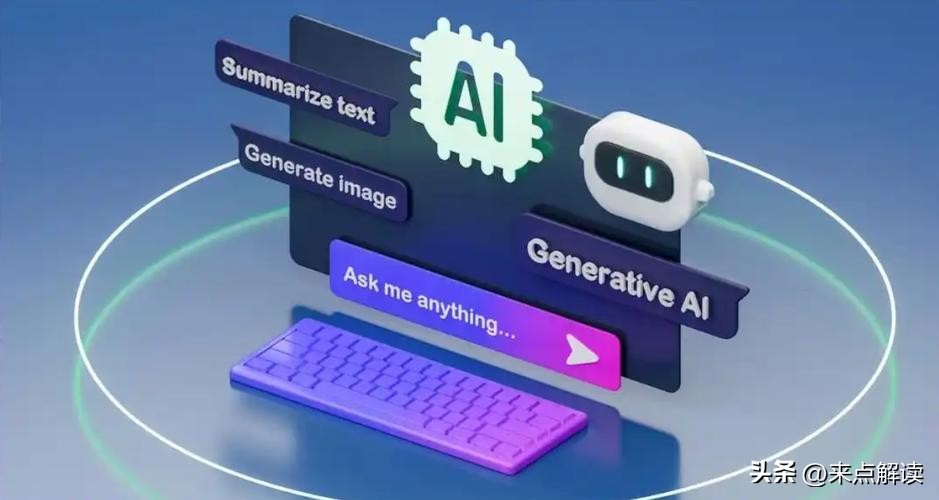
The skill set has broadened. Previously, creating an app required knowledge of Java or Swift, but now, with AI handling the coding, you can focus on understanding user needs and designing user-friendly interfaces.
However, one aspect remains unchanged: you need to know what you want to achieve, evaluate the quality of the AI’s output, and troubleshoot issues. Just like a general leading troops, you must define the strategy while AI acts as the soldiers.
Real-World Examples of VibeCoding Success
A web developer named Zhang recently took on a project for an online registration system. He did not write any code; instead, he described his needs to the AI, which generated a draft. After tweaking the colors and button placements, he delivered the project in just two days.
He mentioned that the most valuable skill now is the ability to articulate requirements, which is far more important than coding speed.
As Zhou Hongyi stated, “What eliminates you is not AI, but those who know how to use AI.” This statement rings true today.
The issue isn’t that AI is taking jobs; rather, those who cannot leverage AI risk being left behind. This is similar to Level 3 autonomous driving: the car drives itself, but a human must take over in complex situations.
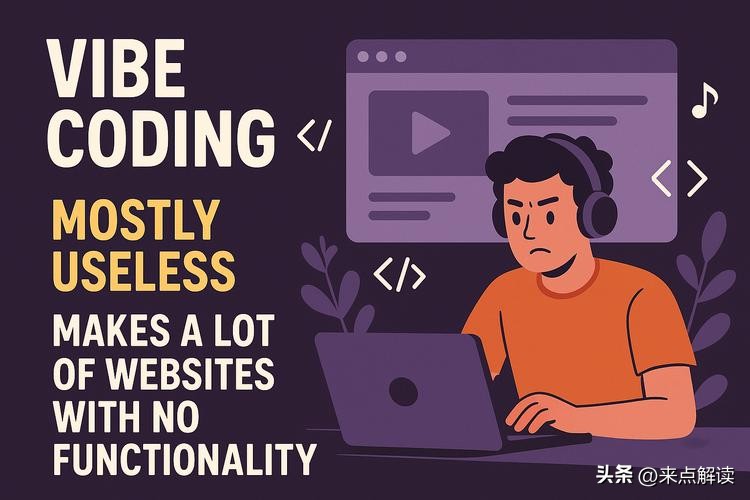
AI may write the code, but if the requirements are miscommunicated or the logic is flawed, the responsibility ultimately falls on you.
Many people hesitate to engage with programming, not because they can’t learn it, but due to self-doubt. A Coursera survey last year revealed that 80% of beginner programmers struggle not because the technology is too difficult, but because of the “impostor syndrome,” where they feel inadequate.
However, some have broken through this mental barrier and made money using VibeCoding. Former ByteDance AI product manager Qiao Xiangyang quit his job last year and began developing enterprise SaaS tools using natural language.
He claimed to have minimal coding knowledge, relying entirely on AI tools. His tools now generate a monthly income of 150,000 yuan, and he charges 200,000 yuan for each online course.
Another example is Yang Zehao, a college student who developed a tool for content creators. He realized many bloggers struggled with creating cover images, so he instructed AI to create a tool that uploads images, adds text, adjusts filters, and generates ten styles.
This tool now earns 250,000 yuan per month, and his content matrix generates over a million yuan annually.
He stated, “I haven’t even mastered Python, but I understand what bloggers need, and AI helped me bring that idea to life.”
Product manager Chen Tongwei developed two iOS lifestyle apps two years ago: one for tracking menstrual cycles and another for family budgeting. He simply communicated his needs to the AI and made several adjustments before launching.
These apps have collectively amassed over 100,000 downloads, generating stable monthly ad revenue of 80,000 to 100,000 yuan.
He remarked, “I used to think app development was solely for programmers, but now I realize that as long as you know what users want, AI can help turn your ideas into reality.”
Internationally, non-technical Ben Tossell has developed over 50 products using AI in the past two years, including tools for writing emails and generating social media content, with one tool earning over $100,000 in a month.
Another entrepreneur, Maor Shlomo, created an AI website generation platform that was acquired by Wix for $80 million. He stated, “I don’t understand programming; I just clearly articulated what users wanted for their websites.”

None of these individuals are formally trained programmers, yet they seized the opportunity presented by VibeCoding. Their common traits include understanding user needs, effectively utilizing AI tools to implement ideas, focusing on user experience, and continuously iterating based on feedback.
These skills were once essential in product management and operations; now, they simply have an AI assistant to lower the technical barrier.
VibeCoding fundamentally transforms programming from a specialized skill for a few into a universal tool for many. Just as Word made typing accessible to everyone and Excel simplified calculations, AI programming tools enable anyone to develop software without learning to code—just by articulating ideas and solving problems.

The shift in roles is inevitable. In the future, fewer people will worry about whether they can code and will instead focus on whether they can generate good ideas and clearly communicate requirements.
Just as no one claims, “I can’t use Word,” some can write excellent articles while others can only keep basic records; the difference lies not in the tools but in the skills.
Breaking through the mental barrier is crucial. Don’t think, “I’m not technical, so I can’t do it.” Qiao Xiangyang and Yang Zehao were also initially afraid of failing, but they discovered that AI is more responsive than they imagined.
If you articulate your needs clearly, it will deliver. If it’s not right, you can adjust until it is.

For ordinary people looking to seize this opportunity, it’s not difficult. Start by identifying tools that people around you need (for example, a tool for mothers to track parenting or for small shop owners to manage inventory), then find an AI programming tool (many free options are available online) and try articulating your needs to it. Once generated, test it out; if it doesn’t work, modify it.
You might just create a small tool that can earn money.
Andrej Karpathy stated that the goal of VibeCoding is for “everyone to be a creator.” This once seemed distant, but now it feels achievable. After all, with AI writing the code for you, all you need to do is be the person who articulates the requirements. Who can’t learn that?
Comments
Discussion is powered by Giscus (GitHub Discussions). Add
repo,repoID,category, andcategoryIDunder[params.comments.giscus]inhugo.tomlusing the values from the Giscus setup tool.